


Introduction
Blackjack is one of the most popular card games in the world. It is played in casinos, online gaming platforms, and even at home with friends. The reason behind its popularity is simple. Blackjack basics are easy to learn, yet the game offers enough depth to keep players interested for years. Unlike many casino games that rely only on luck, blackjack allows players to use strategy, logic, and smart decision-making.
For beginners, blackjack can feel confusing at first. Terms like hit, stand, bust, and dealer rules may seem overwhelming. However, once you understand the core blackjack basics, the game becomes enjoyable and much less intimidating. Intermediate players also benefit from revisiting the basics, as strong fundamentals help improve long-term performance.
This guide is written in simple English to help you clearly understand how blackjack works. It explains rules, card values, gameplay steps, and common mistakes. You will also learn why blackjack is important, its advantages, and the risks involved. Practical examples and expert tips are included to make learning easier.
Whether you want to play for fun or aim to play smarter, learning blackjack basics is the first step. By the end of this article, you will feel confident enough to sit at a blackjack table and make informed decisions without stress.
What is Blackjack Basics?
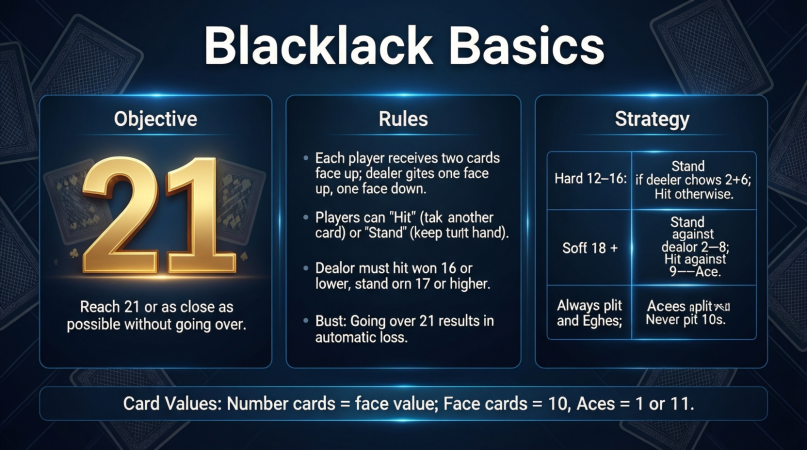
Blackjack basics refer to the fundamental rules, concepts, and actions used in the game of blackjack. Blackjack is a card game where players compete against the dealer, not against other players. The main goal is to have a hand value closer to 21 than the dealer without going over 21.
Each card has a value. Number cards count as their face value. Face cards like kings, queens, and jacks are worth 10. Aces are special because they can be worth either 1 or 11, depending on what benefits the hand most. Understanding these values is a key part of blackjack basics.
The game starts with players placing bets. Each player and the dealer receive two cards. Players usually see both of their cards, while one of the dealer’s cards is hidden. Players then decide whether to take more cards or stop.
Blackjack basics also include learning common actions such as hitting, standing, doubling down, and splitting pairs. These actions determine how the hand is played. Knowing when to use each action is important for playing smart.
In simple terms, blackjack basics teach you how the game works, how to make decisions, and how to avoid going bust.
Why is Blackjack Basics Important?
Learning blackjack basics is important because it helps players make better decisions. Without understanding the basics, players rely only on luck, which often leads to quick losses. Blackjack is one of the few casino games where skill can influence outcomes.
When you understand blackjack basics, you know when to hit or stand instead of guessing. This reduces mistakes and improves confidence at the table. Even small improvements in decision-making can make a big difference over time.
Another reason blackjack basics are important is bankroll management. Players who understand the game tend to bet more responsibly. They know when to increase bets and when to slow down. This helps prevent emotional decisions that can lead to heavy losses.
Blackjack basics also make the game more enjoyable. Instead of feeling confused or stressed, players feel in control. They can focus on strategy rather than rules. This creates a more relaxed and fun experience.
For intermediate players, revisiting blackjack basics strengthens discipline. Many losses happen because players forget basic rules during long sessions. Strong fundamentals keep gameplay consistent and focused.
Detailed Step-by-Step Guide
Step 1: Understanding Card Values
Card values are the foundation of blackjack basics. Without this knowledge, every decision becomes risky.
Number cards from 2 to 10 are worth their face value. Face cards, including jack, queen, and king, are worth 10 points. Aces are flexible and can count as either 1 or 11.
For example, a hand with an ace and a 7 can be valued at 8 or 18. The game automatically uses the value that benefits the player the most. This flexibility makes aces very powerful.
Step 2: Placing Your Bet
Before any cards are dealt, players place their bets. This is a fixed amount decided by the table limits. Blackjack basics encourage beginners to start with small bets.
Betting should always match your budget. Never bet money you cannot afford to lose. Smart betting is part of long-term success.
Step 3: Dealing the Cards
Each player receives two cards face up. The dealer receives one card face up and one face down. The dealer’s visible card is known as the upcard.
The upcard plays a big role in decision-making. Blackjack basics teach players to adjust their actions based on what the dealer shows.
Step 4: Player Decisions
Players act first. Common actions include:
- Hit: Take another card
- Stand: Keep your current hand
- Double Down: Double your bet and take one final card
- Split: Separate two identical cards into two hands
Each action has a purpose. Knowing when to use them is a key part of blackjack basics.
Step 5: Dealer’s Turn
After players finish, the dealer reveals the hidden card. Dealers must follow strict rules. Usually, they must hit until reaching at least 17.
Dealers do not make choices. This predictability allows players to plan strategies more effectively.
Step 6: Winning or Losing
If your hand is closer to 21 than the dealer without busting, you win. If you exceed 21, you lose automatically. A natural blackjack, which is an ace and a 10-value card, often pays extra.
Benefits of Blackjack Basics
- Easy to learn compared to other casino games
- Combines skill and luck
- Low house edge when played correctly
- Encourages logical thinking
- Flexible betting options
- Suitable for beginners and experienced players
Disadvantages / Risks
- Can still lead to losses without discipline
- Emotional decisions can increase risk
- House rules may vary by table
- Long sessions may cause fatigue
- Misunderstanding rules can be costly
Common Mistakes to Avoid
Many players ignore blackjack basics and rely on gut feelings. This often leads to poor decisions. One common mistake is hitting when already close to 21. Another is standing too early out of fear.
Chasing losses is another major mistake. Players increase bets emotionally instead of logically. This usually results in bigger losses.
Ignoring the dealer’s upcard is also risky. Blackjack basics teach that the dealer’s visible card matters a lot.
Splitting or doubling down without understanding when to do so is another error. These actions should be used carefully and strategically.
FAQs
What is the main goal of blackjack?
The main goal is to beat the dealer by having a hand value closer to 21 without going over. You do not compete against other players at the table.
Is blackjack based on skill or luck?
Blackjack involves both skill and luck. While cards are random, smart decisions based on blackjack basics can improve results over time.
What happens if both the player and dealer have the same total?
This is called a push. In a push, the player’s bet is returned, and no one wins or loses.
Can beginners play blackjack confidently?
Yes, beginners can play confidently once they understand blackjack basics. The rules are simple, and practice improves confidence quickly.
Why is the ace important in blackjack?
The ace is important because it can count as 1 or 11. This flexibility helps players avoid busting and create strong hands.
Is card counting part of blackjack basics?
Card counting is an advanced technique and not part of basic learning. Beginners should focus on rules and basic strategy first.
Expert Tips & Bonus Points
Always start with a clear budget and stick to it. Discipline is more important than winning streaks. Take breaks during long sessions to stay focused.
Pay attention to table rules before playing. Small rule differences can affect strategy. Practice with free games to build confidence without risk.
Remember that blackjack basics are your foundation. Mastering them gives you control, clarity, and a better overall experience.
Conclusion
Blackjack is a game that rewards preparation, patience, and smart decision-making. Learning blackjack basics gives players a strong foundation that improves both confidence and performance. Instead of guessing, players can make informed choices that reduce unnecessary risks.
For beginners, blackjack basics remove fear and confusion. The rules become clear, actions make sense, and the game feels enjoyable rather than stressful. Intermediate players benefit by reinforcing discipline and avoiding costly mistakes that often come from overconfidence.
Understanding card values, dealer rules, and player actions creates a smoother experience at the table. It also helps players manage their money wisely and avoid emotional decisions. While no strategy guarantees wins, strong fundamentals increase consistency.
Blackjack remains popular because it balances simplicity with strategy. Anyone can learn it, yet mastery takes time. By focusing on blackjack basics, players build habits that support long-term enjoyment.
Whether you play casually or aim to improve your skills, always return to the basics. They are the key to playing blackjack smarter, calmer, and with greater confidence.
